

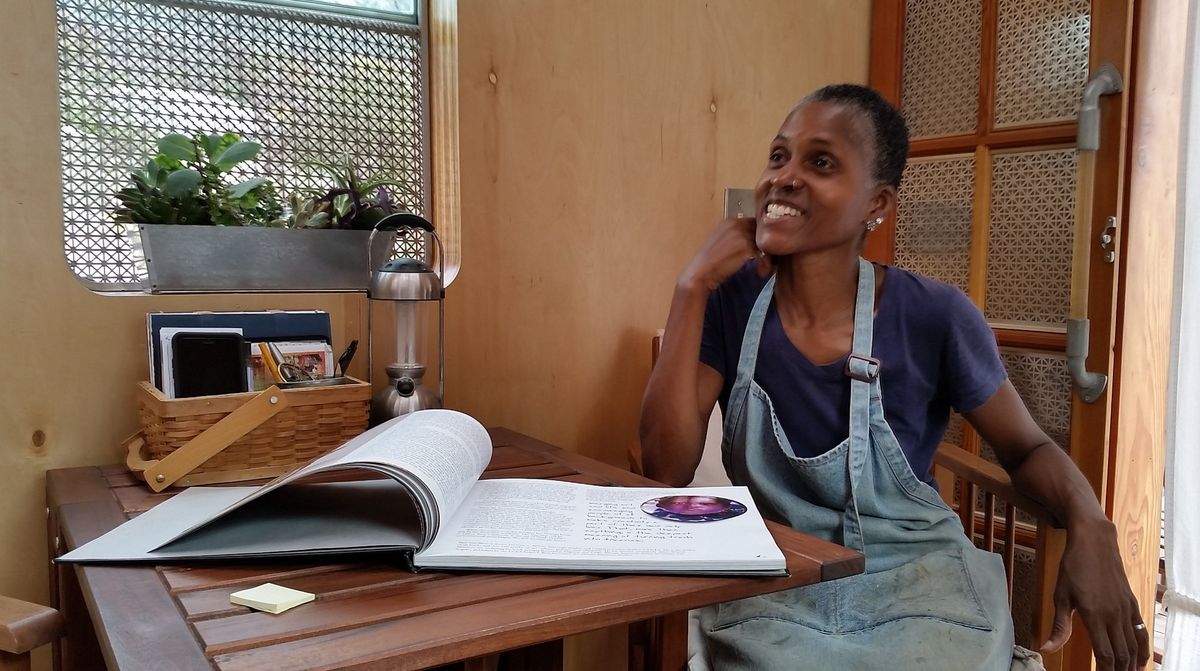
<em>Nomad: Residency with Artist Dominique Moody</em> (Installation view). California African American Museum, December 1–5, 2015
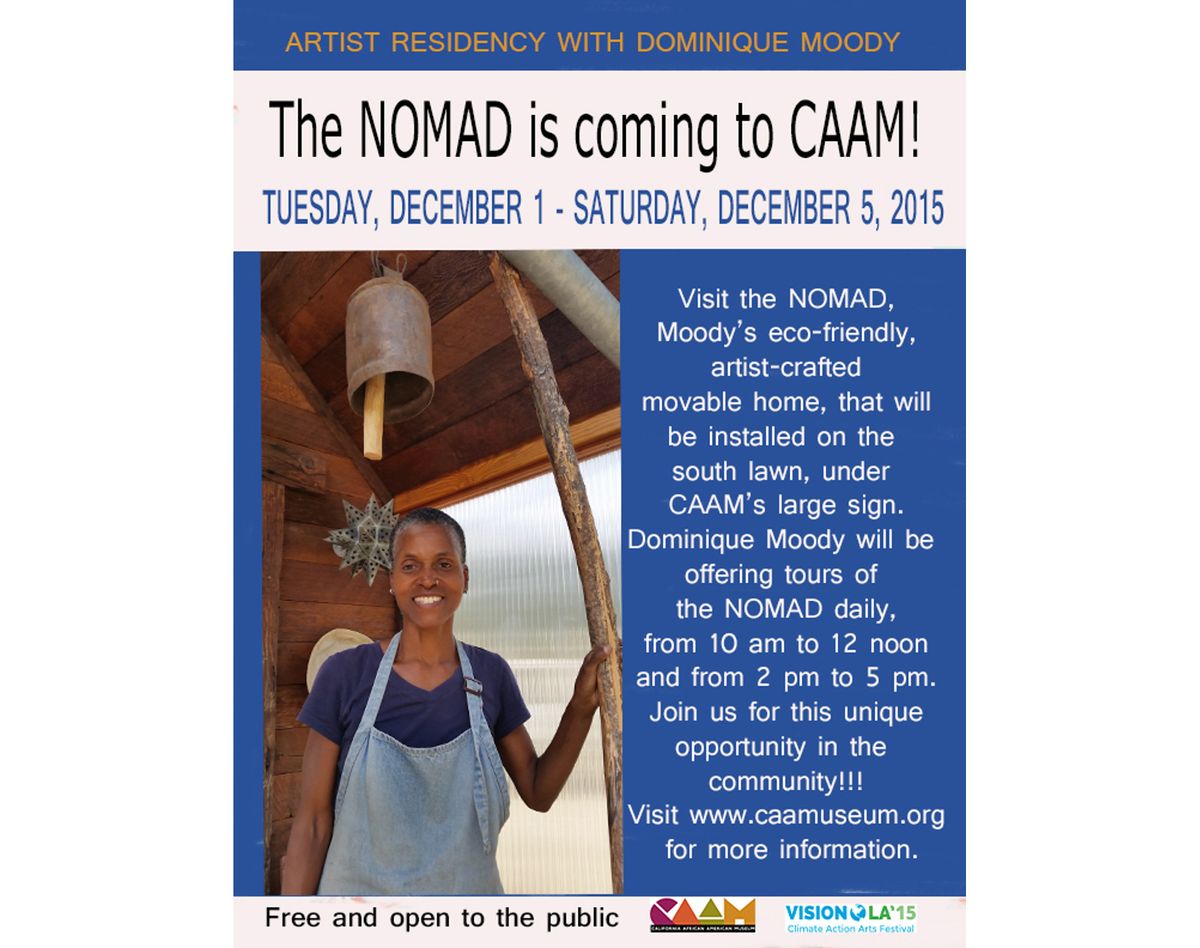
Nomad: Residency with Artist Dominque Moody
December 1 – December 5, 2015
The Nomad narrates artist Dominique Moody's personal sojourn, her family legacy, and a cultural odyssey. Its story melds life and art together as a narrative and serves as a catalyst to conversations about cultural, social, ecological, and economic challenges of our times. As an architectural form, its roots have an African-Haitian origin.
The Nomad is coming to the California African American Museum for a five-day residency and an assemblage workshop led by Moody. The Nomad trailer will be installed at CAAM at a designated outdoor location, where it will be available for tours by Moody during normal Museum business hours. The Nomad will arrive in the morning of Tuesday, December 1, and depart at the end of the day on Saturday, December 5. The assemblage workshop will be held on Saturday, December 5, inside the Museum.
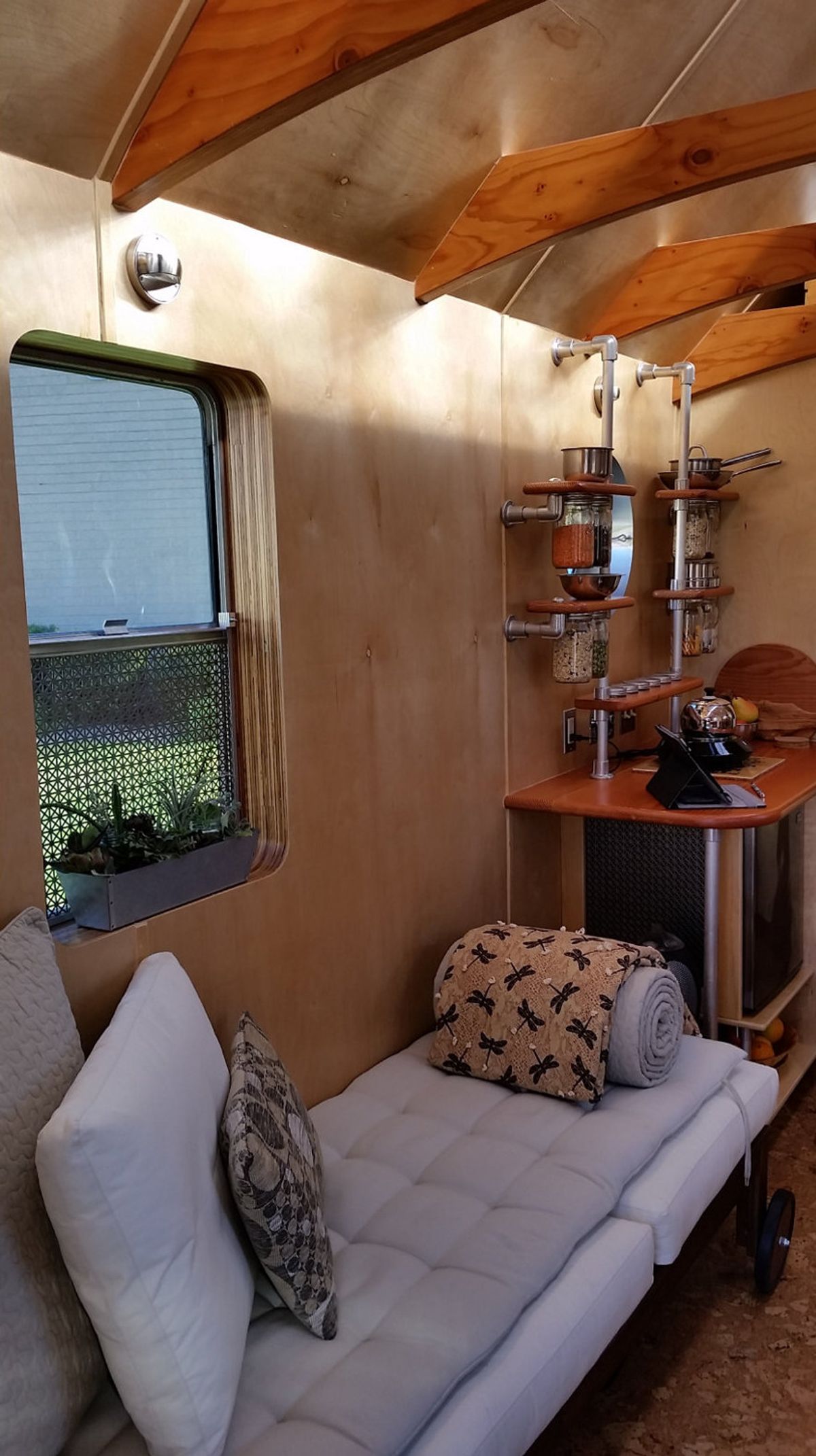
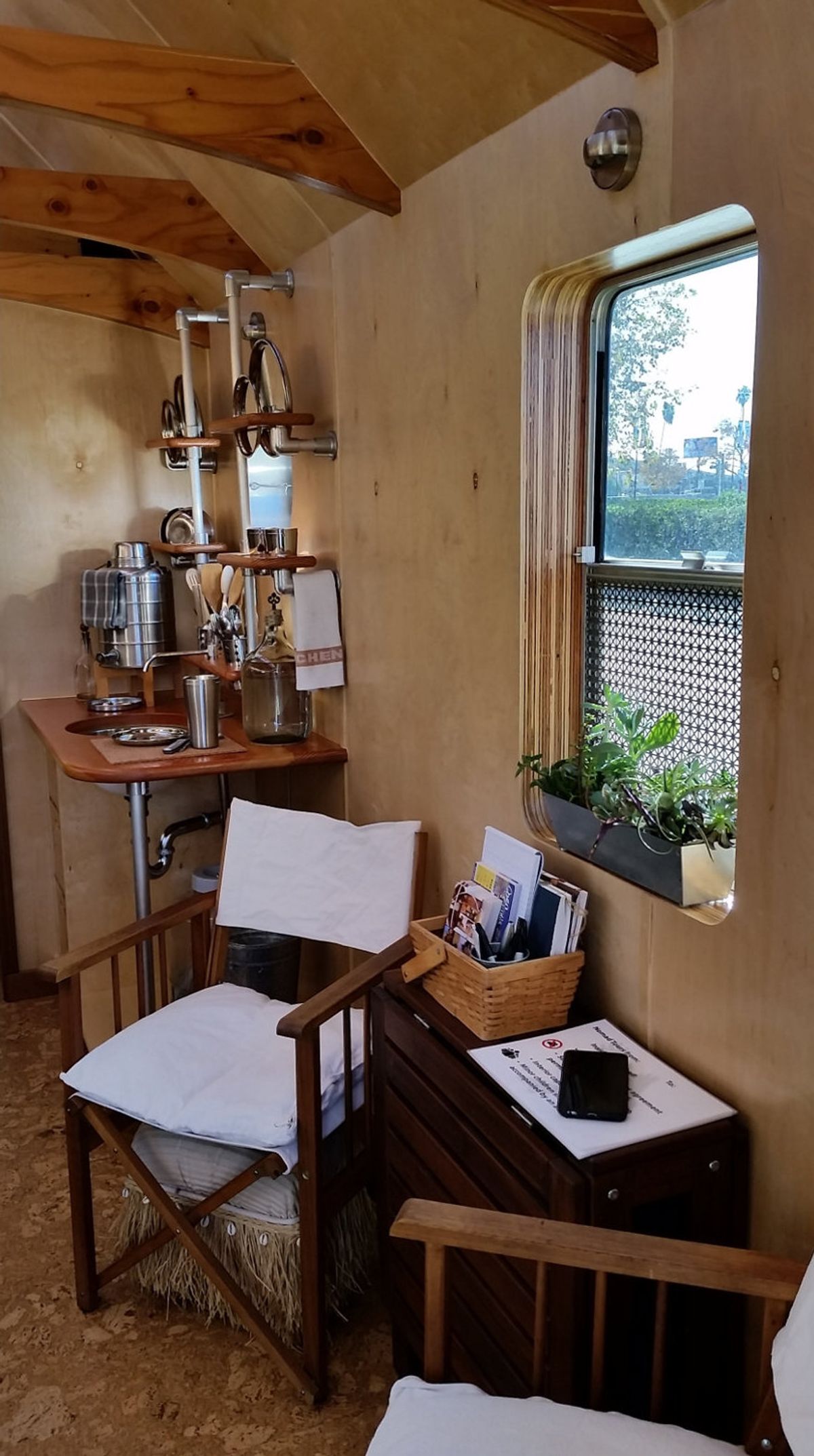
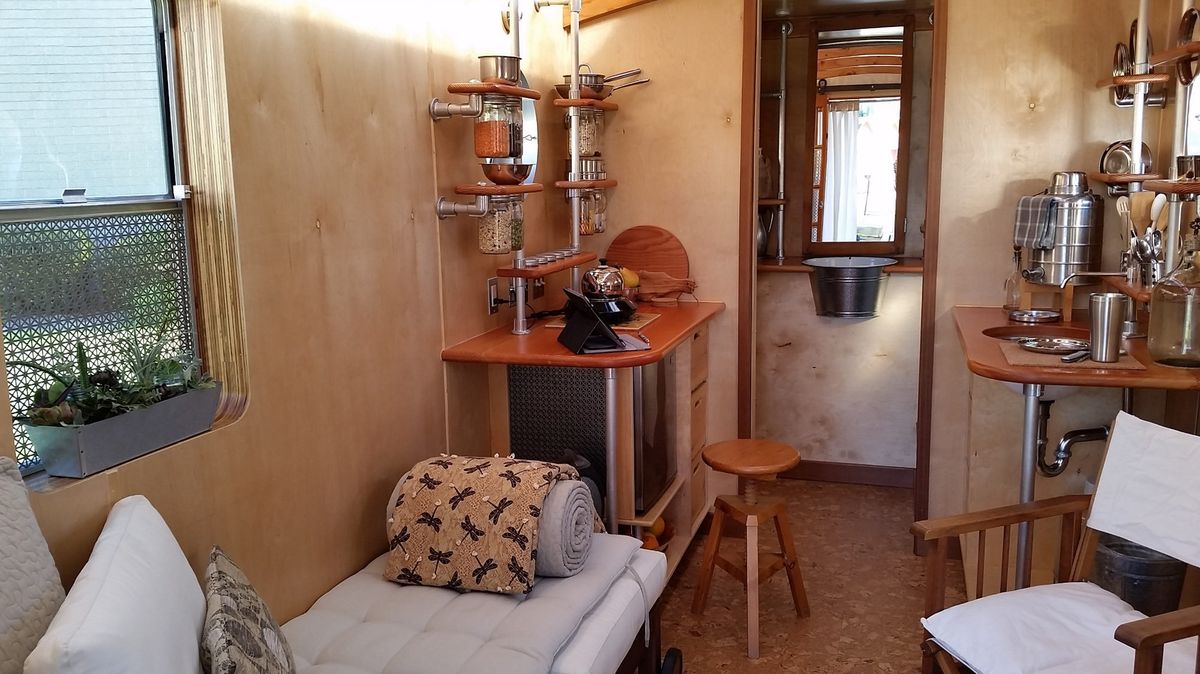
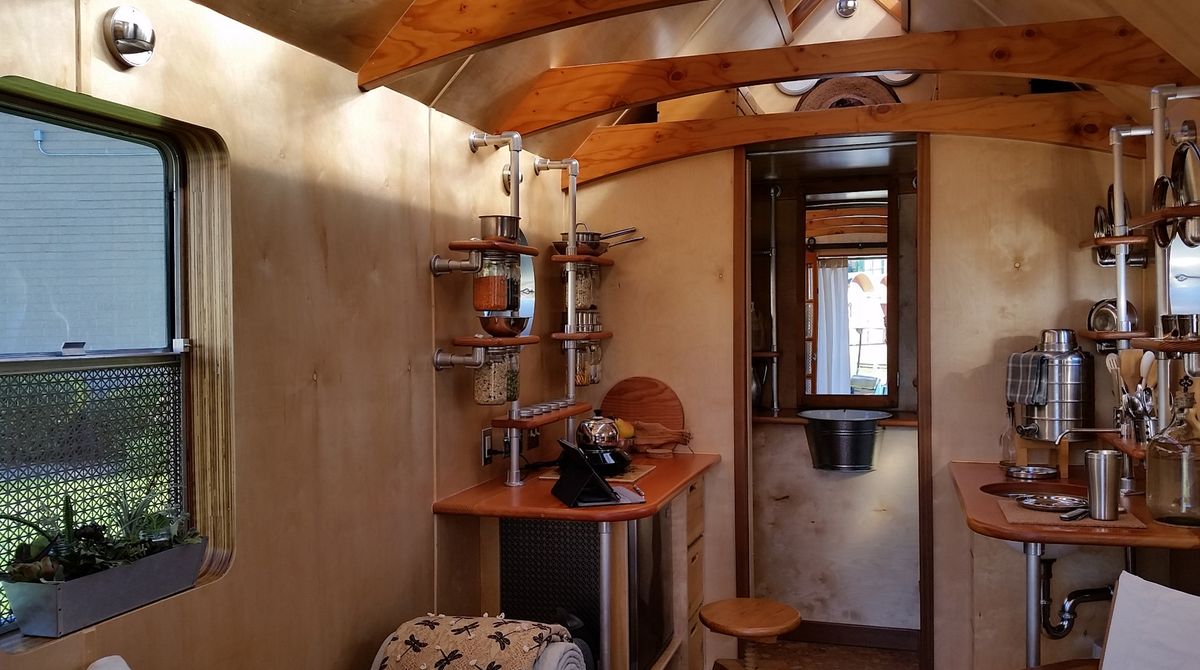
The Nomad is built on a tandem wheeled trailer and measures 8 feet wide by 20 feet long, and its height from the ground to its gabled roof measures twelve-and-a-half feet. The object's total weight is 6,350 pounds. Materials consist of wood, corrugated and patinated metal, reclaimed wood, found objects, galvanized metal, polycarbonate panels, end grain plywood, and natural cork. At 120 square feet, the Nomad has a capacity for only 6 people at a time, but it has been toured by as many as 200 people at a single event.
Play on words... NOMAD is an acronym for Narrative Odyssey Manifesting Artistic Dreams.
Sight & Vision: I've been a working artist for at least 40 yrs. I began to lose my central eyesight in my twenties, due to a genetic form of macular degeneration. This condition is a form of non-correctable "partial blindness," but is also defined as low vision or visually impaired and legally blind. Although this affected my eyesight it pushed my creative vision to new depths, requiring me to change from being a realist illustrator to an assemblage sculptor.
The Dwelling: NOMAD, is an assemblage artwork that functions as a dwelling and is mobile. Its practice reflects the ideas and actions of "social sculpture." As a portrait of Home it inspires viewers to remember, to think and to feel a call and response to action. Its mobility commands freedom. Its porch evokes storytelling.
Inspiration: Its creation was inspired by my personal and family story through a cultural legacy. It is an intimate yet epic portrait. My initial exploration, design and preparation took almost 4 years, based on a 30 year dream. The construction of the NOMAD took 3 years.
Work in process: The raw building construction took place at the Anawalt Lumber and Materials business located in Montrose, CA, and for the finish work it was returned to be sheltered within their large lumberyard stock barn, during the rainy season.
From A to Z: Another worksite was the Zorthian Ranch in Altadena, CA, were the exterior metal siding and welding work required an open setting during the spring and summer. The construction required many additional hands and skills, I engaged both hired and volunteer crews to assist me in the various stages of construction and finish work.
Wearing many hats: As the artist/builder, not only did I have the hands on demands of the process of construction but I also had the responsibility to manage the additional assistance, the volunteers, the funding and donation sources and the research to acquire the materials and hardware. And of course, all aesthetic decisions.
The name: Since the construction of the NOMAD has been completed the NOMAD is no longer a "project" but is now a life "practice," so its title is just the "NOMAD."
Public practice: As a function of its mobile nature the NOMAD becomes a nomadic artist in residence when invited as a guest by arts organizations, cultural centers, museums, communities or educational campuses.
Open (air) Studio: However the NOMAD is not a formal studio or workspace. That process will take place in physical form outside of the structure mostly were the materials and objects will be found. These site specific works will be documented while in process and then left in their sites to be discovered by chance.
Footprint: The NOMAD is not made entirely with reclaimed materials, however it's ecologically small footprint created a durable structure for the concept and design that was inspired by salvaged, found and repurposed materials. Each piece became a narrative metaphor which featured simple beauty and design and could be applied as full or multi-functional components.
The pulling vehicle: A 1950 Ford F5 ex-tow truck that now has a boxed in bed, will be the truck to pull the NOMAD ultimately, but it is currently still a work in process. Due to my eyesight I do not drive. Hopefully I will find someone with the skills and experience to facilitate my cross country journey. But before I begin my journey on the road, my street travel is through a collaboration with Side Street Projects — a mobile wood workshop that brings woodworking to the schools--so currently the organization's truck and drivers accommodate my local travel.
— Dominique Moody
exhibition preview
of 6